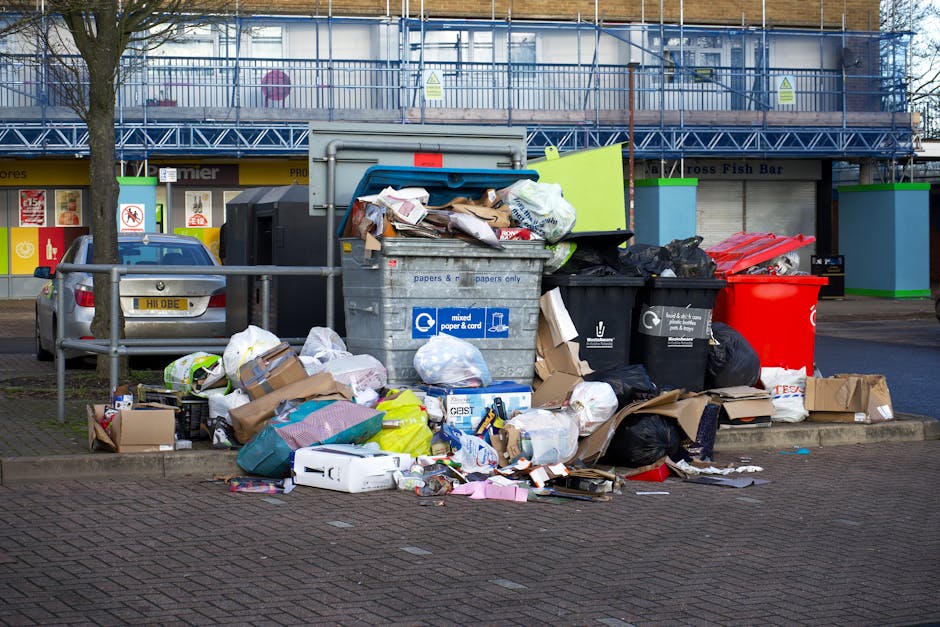
Office rubbish clearance West Byfleet for local businesses
Office clear-outs can look simple from the outside. In reality, they are often the jobs that quietly stall a working week: piles of outdated chairs, broken monitors, empty filing cabinets, old paperwork, and that one storage cupboard nobody wants to open. If you run a local business, Office rubbish clearance West Byfleet for local businesses is not just about getting rid of waste. It is about keeping the workplace safe, presentable, efficient, and ready for the next day's work.
Whether you are moving premises, refurbishing an office, downsizing, or just dealing with the slow build-up of clutter, a proper clearance service helps you remove waste without turning the building into a mess. And to be fair, most teams have enough to do already. You do not want staff spending an afternoon wrestling with old desks when they should be serving clients, answering calls, or keeping the business moving.
This guide explains how office rubbish clearance works in West Byfleet, what business owners should expect, which mistakes to avoid, and how to make the whole process as straightforward as possible. It also covers compliance, practical planning, and the sort of decisions that save time later. A few small details make a big difference here.
Table of Contents
- Why it matters
- How it works
- Key benefits and practical advantages
- Who this is for and when it makes sense
- Step-by-step guidance
- Expert tips for better results
- Common mistakes to avoid
- Tools, resources and recommendations
- Law, compliance, standards, and best practice
- Options and comparison table
- Case study or real-world example
- Practical checklist
- Conclusion
- Frequently asked questions
Why Office rubbish clearance West Byfleet for local businesses Matters
Office waste has a habit of building up slowly. First it is a spare box of stationery. Then a couple of broken monitors. Then a stack of old catalogues, redundant files, awkward furniture, and packaging from a delivery three months ago. Before you know it, the storage room is full and people are stepping around things instead of using the space properly.
For local businesses in West Byfleet, the issue is not only appearance. Clutter affects day-to-day operation. It can make cleaning harder, create trip hazards, block access to fire exits or cupboards, and generally make the office feel less organised. A tidy working environment usually supports a calmer one. Sounds obvious, but it really is true.
There is also a reputational side. If clients, suppliers, or visiting staff walk into a workspace with waste piled in corners, it can leave the wrong impression. That matters in a village and commuter-belt setting like West Byfleet, where businesses often rely on trust, local reputation, and repeat work.
Another factor is time. Small teams especially do not have spare labour sitting around. Clearing office rubbish in-house often means pulling people away from their actual roles. That is rarely efficient. A professional clearance service can remove the waste in one visit and let the business carry on.
If you want the broader picture of how commercial waste services fit together, the site's business waste removal page is a useful place to start. For larger mixed clearances, you may also find waste removal relevant.
Expert summary: Office rubbish clearance is most valuable when it prevents disruption, protects safety, and restores usable working space quickly. The best results come from planning the clearance before waste becomes a problem, not after.
How Office rubbish clearance West Byfleet for local businesses Works
Most office rubbish clearance jobs follow a fairly simple pattern, though the exact approach depends on the building, access, and the type of waste involved. In practice, the process usually begins with a short conversation about what needs removing. That might include bagged waste, broken office furniture, paper records, packaging, IT equipment, appliances, or general office clutter.
From there, the provider will normally assess the volume and the nature of the waste. This helps work out how many staff are needed, whether the clearance will be a quick collection or a more involved job, and whether any items need special handling. For example, confidential documents should not just be thrown in with mixed rubbish. In those cases, a service such as confidential shredding may be relevant.
On the day itself, the team usually arrives, confirms the load, gets access sorted, and removes the items from the office, storage area, or basement. If the business is still operating, good communication matters. A clearance crew should work around office hours where possible, keep noise and disruption sensible, and avoid blocking staff movement. You would be surprised how much smoother things go when someone has already cleared a corridor before the team turns up.
After collection, waste is typically separated where possible for recycling, reuse, or responsible disposal. Office waste is often mixed, so the ability to sort items properly is important. More on that later.
Some businesses also combine office clearance with disposal of worn-out furniture. If that is part of your project, the pages for furniture clearance and furniture disposal are worth noting. Office chairs, desks, shelving, and cabinets often fall into this category.
Key Benefits and Practical Advantages
The benefits of a proper office clearance are more practical than flashy. That is probably a good thing. You are not buying marketing fluff; you are solving a workplace problem.
1. A safer workplace
Clear floors and tidy corridors reduce the chance of trips, blocked access, and general awkwardness. A business should not have staff balancing around broken furniture at 9 a.m. on a Monday. Let's face it, nobody needs that energy.
2. Faster use of space
Once the clutter is gone, storage rooms can become storage rooms again. Meeting areas can become meeting areas again. Even a small office starts to feel bigger once redundant items are removed.
3. Better first impressions
If clients visit your premises, a neat office signals professionalism. Even if they never see the back room, the overall feel matters. People notice order. They notice chaos too.
4. Less pressure on staff
Teams do not need to sort, carry, or guess what should happen to old items. That removes a surprising amount of friction. In our experience, staff are usually relieved when someone else takes ownership of the job.
5. Improved recycling outcomes
When waste is handled properly, more material can often be diverted from general disposal streams. That can be useful for your internal sustainability goals and for the practical reality of managing mixed office waste.
6. Better planning for refurbishments or moves
Office moves and fit-outs always reveal hidden problems. A pre-clearance reduces the volume of stuff you have to carry into a new space. If you are refurbishing or relocating, it is often the difference between a smooth handover and an expensive headache.
If sustainability is part of your business values, the site's recycling and sustainability page gives a useful sense of how material recovery and responsible disposal fit into the bigger picture.
Who This Is For and When It Makes Sense
Office rubbish clearance is not just for large companies with whole floors of furniture to remove. It is useful for all sorts of local organisations, from small studios to professional practices, retail back offices, estate agents, and shared workspaces.
You are likely to need it if you are:
- moving into or out of an office unit
- refurbishing, redecorating, or reconfiguring work areas
- replacing desks, chairs, filing cabinets, or storage units
- clearing a stockroom, archive room, or plant room
- disposing of broken or obsolete office equipment
- dealing with a backlog of mixed waste after a busy period
- trying to improve fire safety and general housekeeping
It also makes sense if your office space is shared. Co-working environments and serviced offices can accumulate small amounts of waste very quickly, and those little piles can become a nuisance fast. One broken printer, one old sofa, one stack of packaging, and somehow the room looks full. Strange how that happens.
Some businesses need the service only once or twice a year. Others use it after every mini-move, fit-out, or change of tenant. There is no single right pattern. The right time is simply the moment when waste begins interfering with how the business works.
For businesses that have already carried out a partial office clearance and are left with bulky pieces, the pages on office clearance and furniture clearance can help you think through the best next step.
Step-by-Step Guidance
If you want the job to go smoothly, a bit of preparation pays off. The process does not need to be complicated, but it does need to be deliberate.
- Walk the space properly. Look in cupboards, under desks, in storage areas, and around the back of the office. The "hidden" rubbish is often where the time goes.
- Separate what must stay. Keep working equipment, documents, and personal items away from the clearance pile. A mistaken throw-out is annoying at best and disruptive at worst.
- Identify sensitive material. Paper records, laptops, hard drives, and branded documents may need special handling.
- Flag bulky or awkward items. Desks, cabinets, old refrigerators, and damaged furniture can change the logistics of the job.
- Ask about access. Stairs, lifts, narrow corridors, parking restrictions, and loading points all matter more than people expect.
- Agree the timing. Early morning, evening, or weekend clearance may be easier for occupied offices.
- Check what happens after collection. A responsible provider should explain how items will be sorted, reused, recycled, or disposed of.
- Keep a record. For business housekeeping and internal audit purposes, a brief note of what was removed can be useful.
If the clearance is part of a larger business waste routine, it may help to review the wider business waste removal service so your office and general waste processes fit together neatly rather than working against each other.
A small but important tip: label areas before the team arrives. A sticky note on "retain," "shred," and "remove" can save a surprising amount of back-and-forth. Not glamorous, but effective.
Expert Tips for Better Results
Good office clearance is mostly about clarity. The more clearly you define what is being removed, the fewer surprises there are.
Sort by function, not by mood. People tend to make emotional decisions during clear-outs. This chair is old, but maybe someone will want it. That box might be useful. The trouble is, "might" fills rooms. Decide based on actual use, not hope.
Protect access routes first. Clear a path from the waste area to the exit before the main removal starts. It helps the work move faster and reduces the chance of damage.
Keep confidential items separate. Do not mix sensitive papers with ordinary office waste. If records are involved, use a designated process and speak clearly about it from the beginning.
Think about future storage. If you are clearing an archive or store cupboard, ask what you really want that space to become. Archive space? Staff storage? Spare meeting area? Having a purpose stops clutter from creeping straight back in.
Use a realistic time window. The office always seems tidier in the plan than it is in real life. Allow a bit of breathing space, especially if staff need to identify items during the clearance.
Don't ignore digital waste. Old computers, monitors, and printers are not just "rubbish." They are often part of a separate decision-making process because of data, electrical components, and disposal method. If you have mixed items, ask about the right handling before collection.
Plan for the aftermath. Once the waste is gone, you may need a quick clean, a furniture rearrangement, or a fresh storage layout. It is easier to do that immediately than leave the office half-finished for two weeks. Which, honestly, is how these things linger.
If your clearance involves safety planning or contractor coordination, pages such as health and safety policy and insurance and safety can be useful references for setting expectations internally.
Common Mistakes to Avoid
Most clearance problems are preventable. The mistakes are usually simple, which is why they happen so often.
1. Leaving decisions until collection day
If nobody has decided what stays and what goes, the team on site ends up waiting. That slows everything down.
2. Mixing confidential papers with general rubbish
This is a common one. It creates avoidable risk and extra sorting work.
3. Forgetting about access restrictions
Stairwells, narrow lifts, coded entrances, parking rules, and building management requirements can all affect the job.
4. Assuming every item is disposable in the same way
Office waste is often mixed: paper, metal, wood, plastic, electrical items, and upholstered furniture. One-size-fits-all thinking rarely works well.
5. Not planning for bulky items
That old desk that looks harmless in the corner may be a pain to move if the route is tight. Worth checking in advance.
6. Using staff labour for a job outside their role
Yes, people can lift things. No, that does not mean they should spend three hours doing it. It is not a good use of time and can create avoidable injury risk.
7. Treating clearance as a one-off without fixing the cause
If paper piles up because there is no archive system, the same mess will return. If packaging keeps appearing because deliveries are not managed, that pattern needs attention too.
Tools, Resources and Recommendations
You do not need fancy software to prepare for an office rubbish clearance. A few practical tools are enough.
- Basic inventory sheet: a simple list of what is being removed, especially if the job includes furniture or archived paperwork.
- Labels or coloured tape: useful for separating retain, shred, recycle, and remove items.
- Phone photos: helpful for confirming awkward items or proving the office state before work begins.
- Access notes: building contact details, loading restrictions, door codes, and parking info should be kept handy.
- Bagging and boxing materials: use these for loose office waste so small items do not spread around during collection.
For furniture-heavy jobs, reviewing the site's furniture disposal and furniture clearance pages can help you decide whether you are dealing with a simple uplift or a broader office reset. For unusual items, hazardous waste disposal is the safer reference point if anything in the office falls outside normal general waste.
One recommendation that saves trouble later: keep a small "future clutter" box out of the main office. If something is waiting for a decision, it goes there for a limited time, not under someone's desk for six months. That tiny habit works surprisingly well.
Law, Compliance, Standards, and Best Practice
Office rubbish clearance for businesses is not just a practical issue; it also touches on legal duty, responsible waste handling, and workplace safety. The details can vary depending on the type of waste and the exact workplace, so it is always sensible to treat compliance carefully rather than casually.
For general office waste, businesses should make sure items are handled by a legitimate waste carrier and are not dumped informally. Records, electronic equipment, and anything sensitive need extra care. Confidential documents should be dealt with properly, and electronic equipment may need data-conscious handling before disposal. That is especially important when old computers or storage devices are involved.
Health and safety also matters. Waste should not be left in walkways, escape routes, or access areas longer than necessary. If a clearance involves heavy furniture or awkward lifting, the business should think about manual handling risks and access planning. It is basic, yes, but basic things are the ones people forget when they are busy.
There is also a wider expectation that businesses act responsibly around recycling and waste segregation where practicable. You do not need perfection, but you do need a sensible process. If your own internal standards are important, make them visible to the team. A clear waste policy beats a vague "we'll sort it later" every time.
Useful supporting references on the site include health and safety policy, insurance and safety, and payment and security if you are reviewing contractor expectations and payment confidence at the same time.
Options, Methods, or Comparison Table
Different offices need different approaches. A small company with a few surplus desks does not need the same setup as a large multi-room workplace clearing years of accumulated material. Here is a simple comparison to help you think it through.
| Method | Best for | Strengths | Limitations |
|---|---|---|---|
| Ad hoc in-house clearance | Very small amounts of waste | Cheap at first glance, quick if items are light | Takes staff away from their work, poor for bulky items, can become disorganised |
| Scheduled office rubbish clearance | Regular office declutters or move-out jobs | Structured, efficient, easier to coordinate with the business day | Needs basic planning and clear decision-making |
| One-off mixed office clearance | End-of-lease, refurbishment, or major tidy-up | Handles many waste types in one visit, reduces disruption | Requires more upfront preparation and item identification |
| Specialist handling for confidential or unusual items | Paper files, IT equipment, sensitive materials, or awkward waste | Lower risk, better compliance, more suitable for business needs | May involve separate coordination for specific items |
For many local businesses, the best answer is a combination: general office clearance for the bulk of the waste, then separate handling for any specialist items. That balanced approach tends to work well and keeps the process sane.
Case Study or Real-World Example
Here is a straightforward example from the sort of job that comes up often.
A small professional office in West Byfleet needed to reclaim a storage room that had quietly turned into a catch-all space. There were broken chairs, a handful of old cabinets, archive boxes, packaging from repeated deliveries, and a printer that had stopped working some time ago - the exact date was a bit fuzzy, which tells you enough.
The team first sorted the room into keep, shred, and remove groups. That part took less time than expected because they used labels and kept the decisions simple. They also checked the access route in advance, which helped because the lift was narrow and the rear entrance had a tight corner.
The clearance itself went quickly once the planning was done. The office regained a useful storage area, the floor space opened up, and the staff no longer had to squeeze past stacked boxes to reach the filing area. Nothing dramatic happened. Which, in clearance work, is usually the sign of a good day.
The best outcome was not just the empty room. It was the reset. The business could use the space properly again, and the clutter did not slowly migrate back because there was now a clearer storage system in place.
Practical Checklist
Use this before arranging an office rubbish clearance. A quick checklist saves a lot of awkwardness later.
- Walk the office and identify every item to be removed
- Separate confidential, reusable, and general waste
- Check whether any electrical items need special handling
- Measure or photograph awkward furniture if access is tight
- Confirm building access, parking, and loading arrangements
- Decide whether the clearance needs to happen outside office hours
- Keep staff personal items and important files out of the removal zone
- Make a note of what should be recycled where possible
- Prepare a simple inventory for internal records
- Plan what the space will be used for after the clearance
If the job also involves general commercial clutter or mixed material, it may help to compare your needs with the site's waste removal service and the practical guidance on what can go in a skip. Even if you are not booking a skip, the material categories are still useful for thinking through sorting.
A little preparation goes a long way. Honestly, it is often the difference between a 90-minute tidy-up and a half-day scramble.
Get a free quote today and see how much you can save.
Conclusion
Office rubbish clearance in West Byfleet is one of those jobs that seems small until it starts affecting everything else. Once clutter builds up, it slows movement, creates safety concerns, makes the office feel tighter, and quietly drains time from the people who should be doing proper work. Clear it properly, and the place feels lighter almost immediately.
For local businesses, the real value is not only in removing waste. It is in restoring control over the workspace. That means better use of rooms, better first impressions, fewer hazards, and a simpler day-to-day routine. The process does not need to be complicated, but it does need to be handled with a bit of care and common sense.
If you are planning a tidy-up, a move, or a larger commercial clearance, start by separating the waste, checking the access, and deciding what needs special handling. The rest tends to fall into place more smoothly than expected.
And once the room is clear, you will notice it straight away. The quiet, the space, the relief. That part is hard to beat.
Frequently Asked Questions
What does office rubbish clearance usually include?
It usually includes the removal of general office waste, unwanted furniture, packaging, old paperwork, broken fixtures, and other clutter that is no longer needed. The exact scope depends on the business and the items involved.
Is office rubbish clearance suitable for small businesses in West Byfleet?
Yes. Small businesses often benefit the most because they usually do not have spare staff to manage bulky waste or time-consuming clear-outs. A quick, organised service can free up valuable space without disrupting the working day too much.
Can office clearance be arranged outside normal business hours?
Often, yes. Many businesses prefer early morning, evening, or weekend arrangements so staff can work without interruption. That is especially useful in occupied offices or shared premises.
What happens to office furniture during clearance?
Office furniture is usually assessed and removed as part of the clearance. Where possible, items may be separated for reuse or recycling rather than treated as mixed waste. If you have large furniture items, it helps to mention them in advance.
Do I need to sort everything before the clearance team arrives?
You do not need to have every single item perfectly sorted, but it does help a lot if you separate keep, remove, and shred items beforehand. The clearer the instructions, the smoother the job.
How should confidential documents be handled?
Confidential documents should be kept separate from ordinary waste and managed through a proper shredding or secure destruction process. Do not mix them into general office rubbish. That creates avoidable risk and extra work.
Is office rubbish clearance the same as business waste removal?
Not quite. Business waste removal is broader and may cover ongoing waste streams, while office rubbish clearance usually refers to a one-off or periodic removal of accumulated office items. They overlap, but they serve slightly different needs.
What if my office has bulky or awkward items?
That is common. Desks, filing cabinets, large cabinets, and old sofas can all be handled, but it is best to mention them beforehand so the right team and equipment are available.
How do I prepare a workplace for clearance day?
Clear access routes, label items, remove personal belongings, and make sure somebody on site can answer questions. A short walk-through before the team arrives usually prevents most delays.
Can office rubbish clearance help with a move or refurbishment?
Absolutely. In fact, it is often most useful during a move or refurbishment because it reduces the amount of waste, clutter, and furniture that needs to be managed during the project itself.
What should I do with old IT equipment?
Old IT equipment should be treated carefully because of data and component concerns. It is wise to separate it from general rubbish and ask about the most appropriate handling before collection.
How do I know if my office waste is being handled responsibly?
Ask how waste is sorted, whether recyclable material is separated, and how different item types are managed. A trustworthy provider should be able to explain the process clearly without making it sound mysterious.
What is the biggest mistake businesses make with office clear-outs?
The biggest mistake is leaving decisions too late. Once staff are standing around asking what stays and what goes, the job slows down and mistakes become more likely. A bit of planning prevents a lot of friction.
Where can I learn more about related services?
You can look at the site's pages for office clearance, business waste removal, and recycling and sustainability for related guidance that supports better planning.